Prospect's Trusted Deadbolt Installation
A deadbolt is the most reliable form of mechanical door security available for residential and commercial properties in Prospect — but its rated resistance to forced entry only applies when every detail of the installation is correct. Our deadbolt installation service ensures every unit fitted is properly positioned, structurally anchored, fully aligned, and tested before the visit ends.
Types of Deadbolts We Install
Single cylinder deadbolts — operated by key from the outside and a thumb turn from the inside, the most common residential deadbolt type, suited to most standard exterior doors.
Double cylinder deadbolts — operated by key from both sides, eliminating the thumb turn and preventing entry via an adjacent broken glass panel. Suited to doors with glass inserts or sidelights.
Deadbolts with anti-pick and anti-drill features — high-security deadbolts incorporating hardened steel inserts and reinforced cylinder housings, for properties requiring a higher level of protection.
Smart deadbolts — combining the mechanical bolt security of a traditional deadbolt with keyless entry through a code, app, or fob.
Heavy-duty commercial deadbolts — reinforced hardware suited to commercial entry points where higher traffic and greater security requirements demand a more robust specification.
What Professional Deadbolt Installation Actually Involves
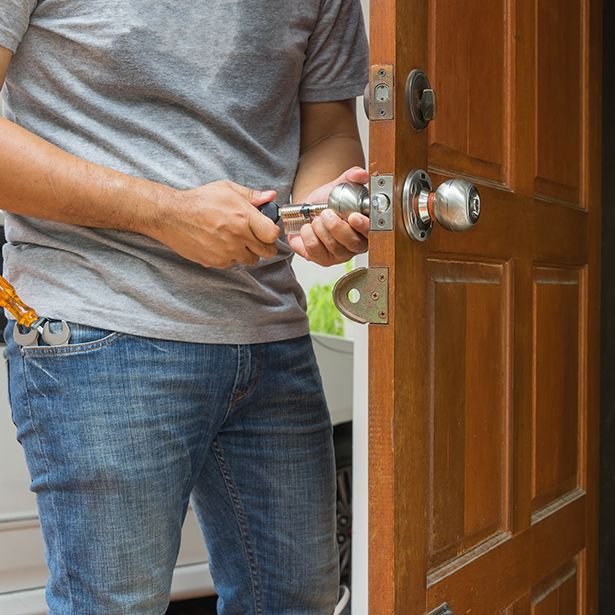
A deadbolt installation looks straightforward from the outside. The details that determine whether it actually performs — under normal daily use and under the specific conditions of a forced entry attempt — are the parts that take experience and care to get right consistently.
Door assessment before any drilling begins. Material, thickness, condition, and existing hardware are all checked before a tool is picked up.
Accurate bore hole placement and sizing. A bore hole even slightly off-centre produces a bolt that doesn’t align with the strike plate correctly.
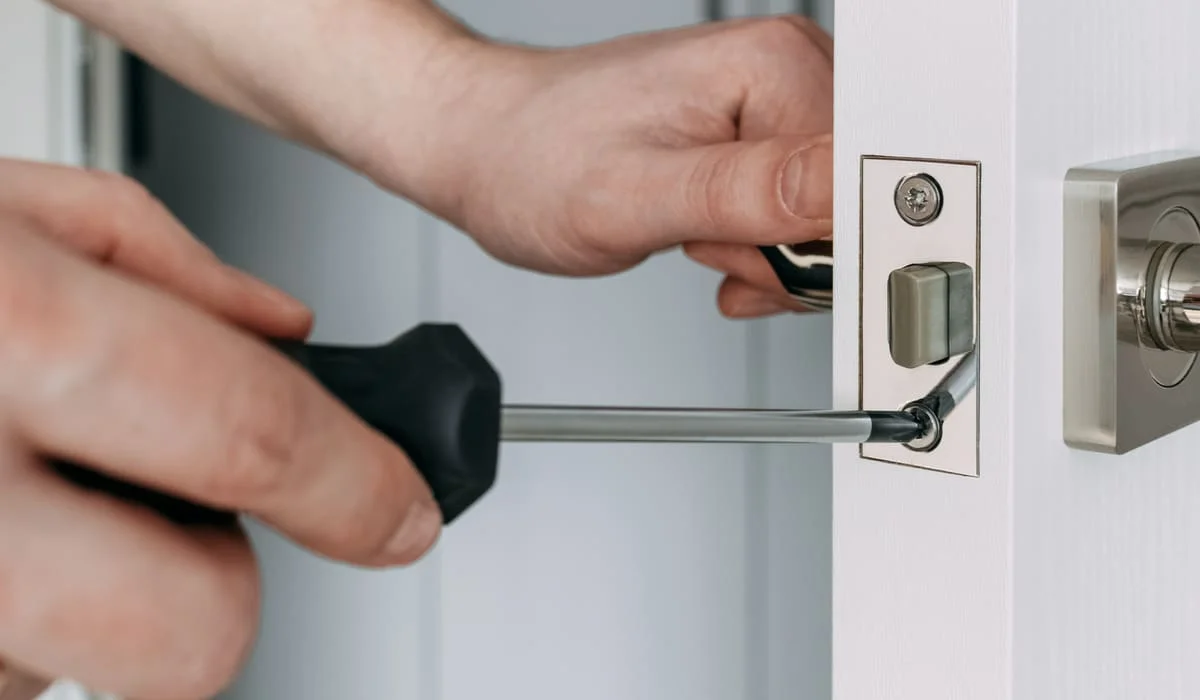
Strike plate installation with structural screws. This is the detail most frequently compromised in amateur installations. Short screws that only reach the door trim provide minimal resistance regardless of the deadbolt’s specification. We use long screws that reach the structural framing behind the trim, anchoring the strike plate to the part of the frame that can actually absorb force.
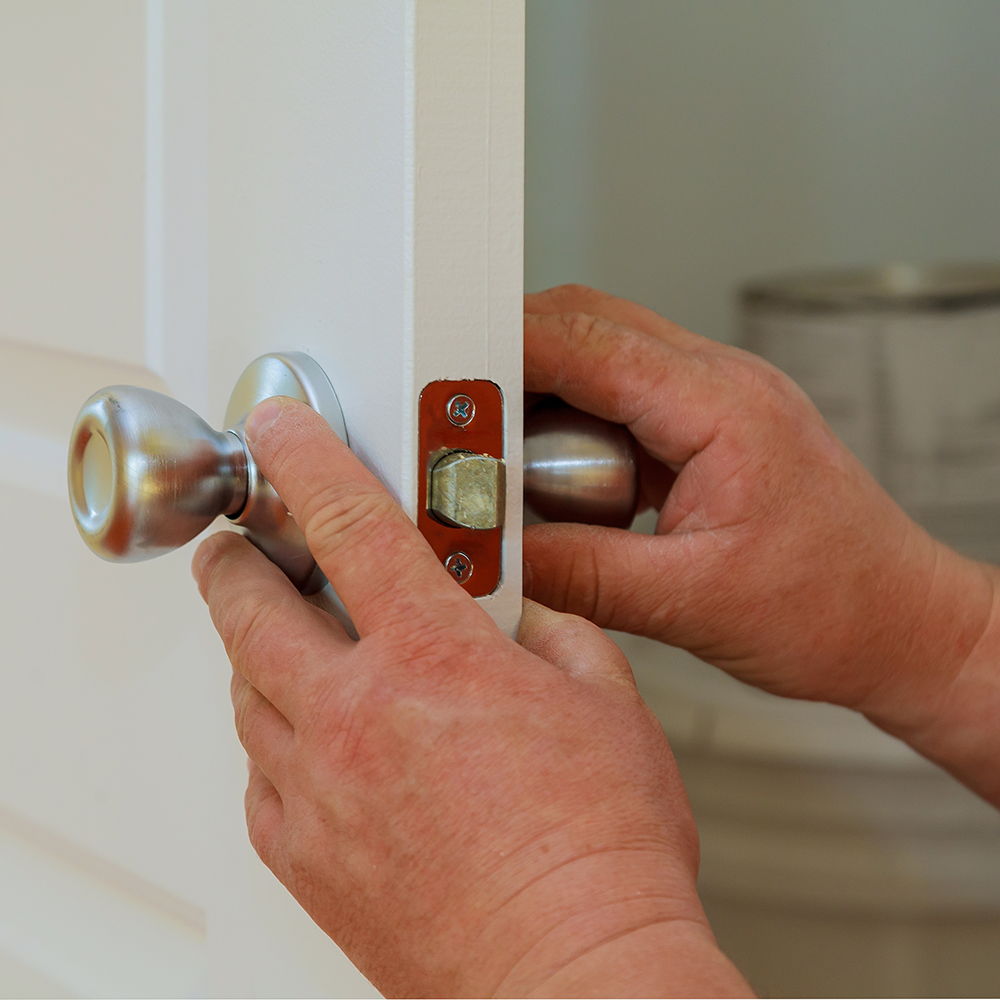
Full bolt throw alignment check. Once fitted, the bolt is checked for complete extension and retraction with the door in its natural closed position.
Cylinder security check. A loose cylinder puts stress on every internal component with every use. Every deadbolt we install is checked for a secure, stable cylinder fit.
Full testing before the visit ends. The deadbolt is operated through multiple full cycles with the door closed before the job is considered complete.
Single Cylinder vs. Double Cylinder — Which Is Right for Your Door
The choice comes down to your specific door configuration and how the property is used. A single cylinder deadbolt is the standard choice for most exterior doors — it allows fast exit without a key from the inside, which matters for both daily convenience and emergency egress. A double cylinder deadbolt eliminates the vulnerability created by a thumb turn near a glass panel, but requires a key from the inside to exit, which creates a genuine safety consideration if the key isn’t kept accessible. We discuss both options and their implications before any hardware is ordered.
Reinforcing the Door Frame Alongside Installation
A deadbolt is only as strong as the frame it’s anchored to. In many Prospect properties, particularly older homes, the door frame itself can be the weakest point in the system, even with a correctly installed high-quality deadbolt. Frame reinforcement options including heavy-duty strike plate systems with extended screws and hinge-side security plates address this vulnerability directly, extending the forced entry resistance of the whole door system rather than just the lock cylinder. We assess frame condition during the installation visit and advise on whether reinforcement makes sense.
Deadbolt Installation for Rental Properties
Rental properties benefit from deadbolt installation in two ways — improved security for tenants and reduced liability exposure for property owners in situations where inadequate hardware contributed to a security incident. For investment properties being prepared between tenancies, deadbolt installation combined with rekeying provides both updated hardware and a fresh key profile.
Maintaining Your Deadbolt After Installation
Lubricate the cylinder annually with dry graphite lubricant to keep the bolt mechanism operating smoothly.
Check bolt alignment seasonally, since temperature and humidity changes can cause timber frames to shift slightly over time.
Inspect strike plate screws periodically, since they can loosen through repeated door use.
Replace worn keys before they cause problems, as uneven pressure from a worn key accelerates cylinder wear.
Every Detail, Done Correctly
A deadbolt that looks right from the outside and a deadbolt that performs correctly under a forced entry attempt are not always the same thing. The difference lies entirely in the details of the installation — bore hole precision, strike plate anchoring, cylinder security, and bolt alignment. Our deadbolt installation service gets every detail right, every time, so the hardware provides the protection it was rated for from the moment it goes in.